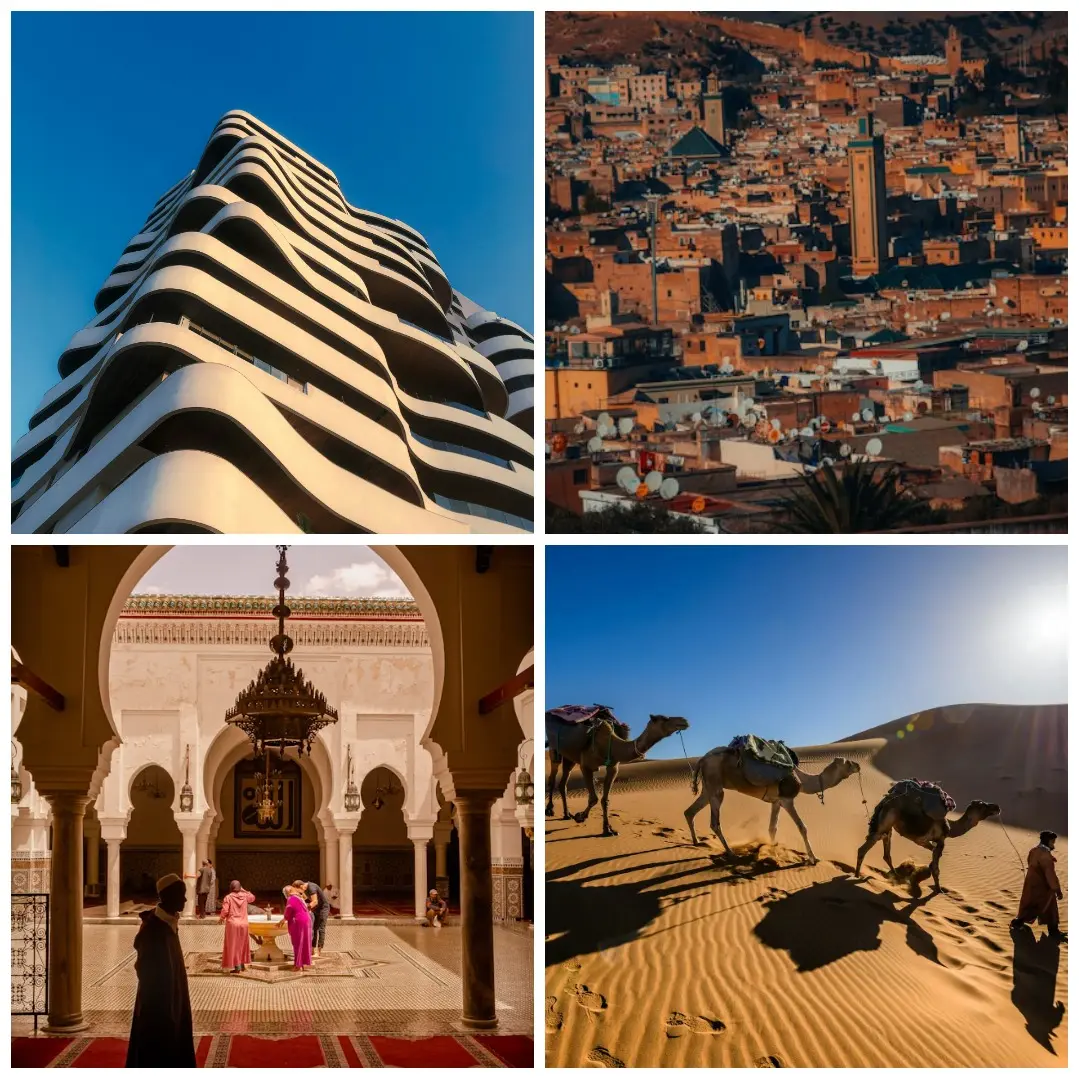
Morocco's economy is one of Africa's most dynamic, growing 5-6% annually. With heavy foreign investment, strategic location, and a young workforce, the country has become an attractive destination for foreign professionals—but the job market is selective. This guide tells you exactly what to expect: which sectors are hiring, what you'll earn, and how to land a job legally.
Quick Summary
| Topic | Reality in 2026 |
|---|---|
| Best sectors for expats | Tech, automotive, finance, tourism, consulting |
| Average expat salary | €25,000-60,000/year |
| Work visa difficulty | Medium (employer must sponsor) |
| Job market language | French primary, English growing |
| Best cities for jobs | Casablanca, Tangier, Rabat |
| Remote work alternative | Highly recommended for foreigners |
The Job Market Reality for Foreigners
Let's be honest: getting a local Moroccan job as a foreigner is harder than it looks.
Why it's challenging
- Moroccan companies prefer to hire Moroccans (lower salaries, less paperwork)
- Foreign hires require visa sponsorship (admin burden for employer)
- Most positions are filled through personal networks
- French language is essential for most roles
- Salaries are 30-50% lower than Western Europe
When it makes sense
- ✅ You have specialized skills not available locally
- ✅ You work for an international company already in Morocco
- ✅ You're being transferred from headquarters
- ✅ You're in tech, automotive engineering, or specific consulting
- ✅ You're starting your own business
When remote work is better
For most expats, remote work for foreign employers is the smarter path:
- Higher salaries (paid in EUR/USD)
- Lower cost of living = more savings
- No work visa complications
- Flexibility to live anywhere
Best Sectors for Foreign Workers
1. Technology & IT ⭐
Why it's hot: Morocco has 250+ tech companies, government tech support, and growing startup ecosystem. Casablanca is becoming "African Silicon Valley."
Roles in demand:
- Software developers (full-stack, mobile, AI)
- Data scientists
- UX/UI designers
- Cybersecurity experts
- DevOps engineers
Top employers: OCP, BMCE Tech, Inwi, Maroc Telecom, Cisco Morocco, IBM, HPS, Outsourcia
Salary range (foreigner):
- Junior dev: €25,000-35,000
- Senior dev: €40,000-70,000
- Tech lead: €60,000-100,000
2. Automotive Industry
Morocco is now Africa's largest car producer, exporting 700,000+ cars/year.
Top employers: Renault Tangier (largest factory in Africa), Stellantis (Peugeot), BYD Morocco, automotive parts manufacturers
Roles:
- Manufacturing engineers
- Quality assurance specialists
- Supply chain managers
- Industrial managers
- R&D engineers
Salary range:
- Engineer: €30,000-50,000
- Manager: €50,000-90,000
- Director: €80,000-150,000
3. Finance & Banking
Casablanca Finance City has attracted 200+ international financial firms.
Top employers: BMCE, Attijariwafa, CIH, Société Générale Maroc, BNP Paribas Maroc, foreign banks
Roles:
- Financial analysts
- Risk managers
- Investment bankers
- Wealth managers
- Compliance officers
Salary range:
- Analyst: €25,000-40,000
- Manager: €50,000-80,000
- Director: €80,000-150,000
4. Tourism & Hospitality
Despite seasonal challenges, top hotels and tour operators hire experienced foreigners for senior roles.
Top employers: Royal Mansour, Mandarin Oriental, Four Seasons, La Mamounia, Travel agency networks
Roles:
- Hotel general managers
- Sales and marketing directors
- Operations managers
- F&B directors
Salary range:
- Department manager: €30,000-50,000
- GM/Director: €60,000-150,000+ (luxury hotels)
5. Consulting (Big 4 + International)
Big 4 firms (Deloitte, PwC, EY, KPMG) and management consultancies have strong Morocco operations.
Top employers: Deloitte Morocco, PwC, EY, KPMG, Roland Berger, McKinsey Casa office
Roles:
- Strategy consultants
- Audit managers
- Tax advisors
- Digital transformation
Salary range:
- Junior consultant: €25,000-35,000
- Senior consultant: €40,000-65,000
- Manager: €65,000-100,000
- Partner: €150,000+
6. Education
International schools always need native English/French teachers.
Top employers: Lycée Lyautey, Casablanca American School, George Washington Academy, British International School
Roles:
- Teachers (all subjects)
- School administrators
- Coordinators
Salary range:
- Teacher: €18,000-35,000 (often with housing allowance)
- Principal: €40,000-70,000
7. Oil & Gas + Energy
Renewable energy growing fast (Noor solar complex is largest in the world).
Top employers: MASEN, OCP, ONEE, Acwa Power, Saudi Aramco offices
Salaries: What You'll Actually Earn
Salary by position level (foreign professional)
| Level | Annual Salary (EUR) | Monthly (EUR) |
|---|---|---|
| Junior (0-3 years exp.) | €25,000-35,000 | €2,000-3,000 |
| Mid (3-7 years) | €40,000-60,000 | €3,300-5,000 |
| Senior (7-12 years) | €60,000-90,000 | €5,000-7,500 |
| Director/VP | €90,000-150,000 | €7,500-12,500 |
| C-Suite | €150,000-300,000+ | €12,500+ |
What companies typically include
- Base salary
- Performance bonus (10-30%)
- Housing allowance (€500-2,000/month for expats — huge benefit)
- Private health insurance
- Annual flights home
- Children's school tuition (for senior roles)
- Company car (senior roles)
Cost of living vs salary
A €40,000/year salary in Morocco gives you a lifestyle equivalent to €70,000-80,000 in France. Housing, food, healthcare are dramatically cheaper.
How to Find a Job in Morocco
1. LinkedIn
The single best platform. Most international companies in Morocco recruit through LinkedIn. Set your location to Morocco, optimize your profile for the local market.
2. Recruitment agencies
- Talents Africa — Senior positions
- Page Personnel Morocco — Mid-level
- Robert Walters Morocco — Finance, tech, executive
- Michael Page Africa — Multinational positions
3. Job boards
- Rekrute.com — Largest Morocco job board
- Bayt.com — MENA region
- LinkedIn Jobs — International companies
- Anapec.org — Government job database
4. Company websites
Apply directly to companies you want to work for. Many open positions aren't advertised publicly.
5. Networking
Morocco runs on relationships. Attend:
- Casablanca Finance City events
- Chambers of Commerce (French Chamber is very active)
- Industry meetups
- LinkedIn live events
6. Headhunters
For senior positions (Director+), specialized headhunters are essential.
Work Visa Process
Step 1: Get a job offer
A Moroccan company must sponsor you. Without sponsorship, no work visa.
Step 2: Employer files paperwork
The company files with:
- Ministry of Labor (ANAPEC clearance)
- Local prefecture
- Immigration office
Step 3: You apply at consulate
Get the work visa at the Moroccan consulate in your country:
- Job contract
- Company sponsorship letter
- Diploma equivalency (sometimes required)
- Health certificate
- Criminal record check
- Passport photos
Processing time: 2-4 months total
Step 4: Arrive and register
Within 15 days of arrival, register at local police for Carte de Séjour.
Need help with visa sponsorship? Get personalized guidance →
Tax Obligations for Workers
Salaries in Morocco are taxed on a progressive scale (income tax, "IR"), updated by the 2026 Finance Act. Social contributions (CNSS and AMO) are deducted before income tax applies.
Income tax brackets (2026)
| Annual net taxable income (MAD) | Tax rate |
|---|---|
| 0 – 40,000 | 0% |
| 40,001 – 60,000 | 10% |
| 60,001 – 80,000 | 20% |
| 80,001 – 100,000 | 30% |
| 100,001 – 180,000 | 34% |
| 180,001+ | 37% |
Social security contributions
- CNSS: 4.48% (employee), on gross salary capped at a 6,000 MAD/month ceiling (max 268.80 MAD/month)
- AMO (health insurance): 2.26% (employee), on the full salary with no cap
Net salary: usually around 80–90% of gross for most salary levels — lower for high incomes, higher for lower ones. Your exact figure depends on your income and dependents.
احسب راتبك الصافي في المغرب
إجمالي ← صافٍ (أو العكس) بجدول 2026: الضريبة على الدخل، CNSS، AMO. وقارن راتبك بالسوق أيضاً.
افتح حاسبة الراتب الصافيNet salary: Typically 75-80% of gross.
Salary Negotiation Tips
What to negotiate
- Housing allowance — Critical for expats (€500-2,000/month)
- Health insurance — International coverage preferred
- Annual flights — 1-2 round trips to home country
- Children's school fees — €5,000-15,000/year per child
- Bonus structure — Performance-based
- Remote work flexibility — Increasingly negotiable
- Visa support costs — Company should cover
What you can typically get
- Junior level: Base salary + insurance
- Mid level: Base + housing allowance + insurance + bonus
- Senior level: All above + school fees + flights + relocation package
Starting Your Own Business
Why many expats prefer this
- Full control of income
- 100% foreign ownership allowed
- Tax incentives (free zones, CFC)
- No need to find employer sponsor
- Path to residency without work visa
See our complete guide: How to Register a Company in Morocco →
Remote Work for Foreign Employers
The best path for many expats:
Advantages
- ✅ Higher salary (EUR/USD rates)
- ✅ Live in Morocco's low-cost environment
- ✅ No work visa needed (90-day tourist visa works initially)
- ✅ Flexibility
- ✅ Build international career
Setup tips
- Have a clear remote work agreement
- Get residency permit (Carte de Séjour)
- Register with Moroccan tax authorities
- Open Moroccan bank account for local expenses
- Use Wise for international transfers
FAQ
Can I work in Morocco without a visa?
No. To work legally, you need either a work visa (employer-sponsored) or a Carte de Séjour (residency). Working on a tourist visa is illegal and risks deportation.
How long does it take to get a Moroccan work visa?
Typically 2-4 months from when you receive the job offer. The employer handles most paperwork. Faster if you're transferring within an international company.
What's the average expat salary in Morocco?
It varies wildly. Junior level: €25,000-35,000/year. Senior management: €60,000-100,000/year. Top executives: €150,000-300,000+/year. These often include benefits worth 20-40% more.
Is French required to work in Morocco?
For 80% of positions: yes. Tech and international companies sometimes accept English-only. Learning French dramatically expands your options and salary potential.
Can my spouse work too?
Yes, but they need their own work visa (separate sponsorship). Or they can be covered under your residence permit if dependent.
What about taxes if I'm earning EUR remotely?
Once you're a Moroccan tax resident (185+ days in Morocco), you're taxed on worldwide income at Moroccan rates. Many remote workers use tax planning to optimize.
Are remote jobs legitimate in Morocco?
Yes. The digital nomad visa (launched 2024) specifically supports this. Many expats work remotely with no issues. Get residency to be fully legal.
Best city for finding a job?
Casablanca by far. 80% of corporate jobs are here. Rabat second (government, embassies). Marrakech (tourism, hospitality). Tangier (manufacturing, automotive).
Final Thoughts
Working in Morocco is achievable but requires strategy. The best paths in 2026:
-
For corporate professionals: Target tech, automotive, or finance in Casablanca. Negotiate hard for housing allowance and benefits.
-
For remote workers: This is the optimal play. Earn EUR salaries, spend in MAD. Get residency for legal protection.
-
For entrepreneurs: Register your own company. Best long-term financial and lifestyle option.
The smartest expats often combine approaches: start with a remote contract, eventually launch a Moroccan business once you understand the market.
Need help navigating the Moroccan job market or work visa? Our team helps professionals from 40+ countries land jobs and secure visas. Get a free consultation →