Marrakech doesn't reveal itself easily. The first-time visitor sees only the chaos: motorbikes weaving through narrow alleys, vendors calling out from every corner, the dizzying scent of cumin and orange blossom. But spend a weekend here with the right map, and the Red City opens up like a well-kept secret.
This isn't another generic guide telling you to visit Jemaa el-Fnaa at sunset (we'll do that too, but properly). This is what we'd actually recommend to a friend flying in for 48 hours—the riads worth booking, the rooftops worth climbing, and the dishes you'll dream about long after you're back home.
Day 1: Settling into the Medina
Morning — Where to stay (and why it matters)
Forget the chain hotels in the Gueliz district. To understand Marrakech, you need to sleep inside the medina, in one of the old riads—traditional houses built around an interior courtyard. The exterior looks like nothing; the interior will take your breath away.
Our top picks:
- Riad BE Marrakech — Minimalist, design-forward, with a small dipping pool. Perfect for couples who want luxury without ostentation.
- El Fenn — Owned by Vanessa Branson (yes, that Branson), this is the queen of stylish riads. Multiple rooftop terraces, an in-house art gallery, and arguably the best restaurant inside any riad.
- Riad Mena & Beyond — A 17th-century palace converted into 9 individually-designed rooms. The kind of place you book once and remember forever.
Local tip: Book a riad with a rooftop terrace and a plunge pool. You'll thank us when the afternoon temperature hits 40°C in July.
Late morning — A proper breakfast on a rooftop
Skip the riad breakfast (it's fine, but you can do better). Walk 10 minutes to Le Jardin, a restaurant hidden inside an old Berber merchant's house. Order the Moroccan breakfast: msemen (flaky flatbread), amlou (Berber Nutella made from almonds and argan oil), fresh-squeezed orange juice, and mint tea poured from a height.
Afternoon — The souks (done right)
Most travelers wander aimlessly through the souks and leave with overpriced trinkets they regret. Here's how to do it properly:
Start at Place des Épices (the spice square). It's calmer, smaller, and a perfect introduction to medina commerce. From here, follow these streets:
- Rue Mouassine — Boutiques selling modern Moroccan design (think: contemporary kaftans, leather goods you'd actually wear in Paris or New York).
- Souk Semmarine — The textile heart. Look for hand-woven Berber rugs—but only buy from vendors who can show you the loom and explain the origin.
- Souk des Teinturiers — The dyers' souk, where wool is dyed in vats of indigo and saffron. The most Instagram-worthy alley in the medina.
Negotiation rule: Whatever the first price is, divide it by 3. Walk away once. They'll call you back. Settle around half the original asking price.
Evening — Jemaa el-Fnaa, but smartly
Yes, you need to see it. But here's the trick: don't eat at the food stalls unless you have an iron stomach. Instead, head to a terrace bar overlooking the square.
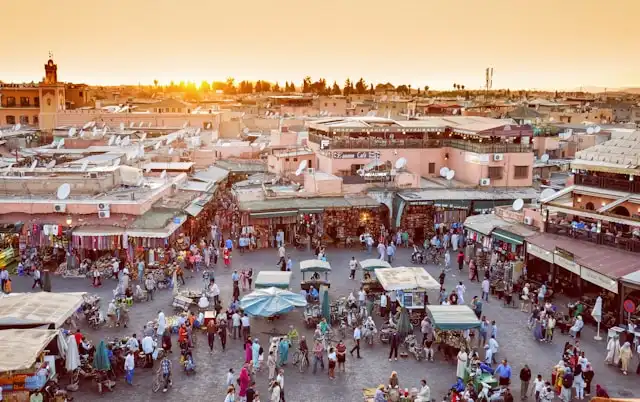
Café Kessabine (rooftop) is perfect at 7 PM. Order a fresh ginger lemonade, watch the snake charmers and storytellers below, and let the chaos wash over you from a safe height. As the sun sets behind the Koutoubia Mosque, the square transforms—drum circles, henna artists, lanterns lighting up.
For dinner, walk 15 minutes north to Nomad, a contemporary Moroccan restaurant on a rooftop in the medina. Their lamb tagine with caramelized pumpkin is the best meal you'll have in the city. Book ahead.
Day 2: Gardens, Palaces, and Hidden Treasures
Morning — The Yves Saint Laurent legacy
Start your day at the Jardin Majorelle. Yes, it's crowded. Yes, it's worth it. The cobalt-blue villa, designed by French painter Jacques Majorelle and later bought and restored by Yves Saint Laurent, is unlike anywhere else on Earth.
Arrive at 8 AM sharp (it opens at 8:30, but the queue forms early). After the garden, walk next door to the Yves Saint Laurent Museum. Even if you don't care about fashion, the architecture alone is worth the visit.
Buy your tickets online the night before. You'll skip a 45-minute queue and pay the same price.
Late morning — A secret palace
Most tourists visit the Bahia Palace and leave. Locals know to also visit the lesser-known Dar Si Said Museum, just five minutes away. Same era (19th century), same level of craftsmanship, a fraction of the crowds. The carved cedar ceilings will make you forget your phone exists.
Lunch — The riad lunch you'll remember
Walk to Café Clock, a former madrasa turned cultural hub. Their camel burger sounds gimmicky, but it's genuinely excellent—lean, gamey, served with harissa mayo. They also host live storytelling sessions on Thursday nights (book in advance).
Afternoon — Hammam, the proper way
You can't say you've been to Marrakech without a hammam. But please, don't go to a tourist spa. Go to a real one.
Two options:
- Hammam de la Rose — Mid-range, clean, professional. Perfect for first-timers nervous about the experience. Around €40-60 for a full ritual (black soap scrub + clay mask + massage).
- Royal Mansour Hammam — If money is no object. The actual royal hammam, where King Mohammed VI's guests are treated. Around €250 per person. Worth every euro for the experience.
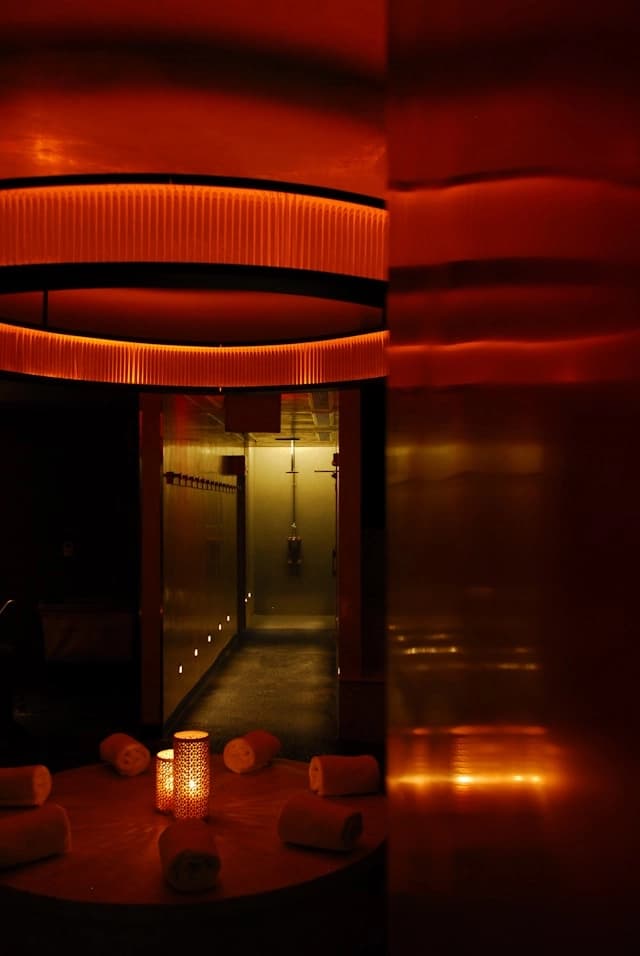
What to know: You'll be nearly naked (or fully, depending on the place) in a steamy room with strangers scrubbing each other. It's intimate, weird, and absolutely magical. Leave your modesty at the door.
Evening — The rooftop you've been looking for
Every guidebook will send you to the same touristy rooftops. We're going to give you the actual best one: Salama Restaurant Rooftop, a 5-minute walk from Jemaa el-Fnaa, but feels like another universe.
Order a Moroccan mint tea (or wine, they're licensed), watch the call to prayer echo across the medina at sunset, and consider extending your trip. Marrakech does that to people.
For dinner, head to +61 (yes, the Australian dial code—chef is Australian-Lebanese, raised in Sydney). Modern Mediterranean meets Moroccan, with the best wine list in the city. Reservations are essential.
Where to Continue: Day Trips Worth Taking
If you have an extra day or two, consider:
- Atlas Mountains (Imlil) — 1.5 hours away. Hike to a Berber village, lunch in a local home, breathe air so clean it hurts.
- Agafay Desert — 45 minutes away. Not the Sahara, but a stunning rocky desert perfect for sunset camel rides and dinner in a luxury camp.
- Essaouira — 2.5 hours by car. A coastal town with Atlantic breezes, blue boats, and the freshest grilled sardines you'll ever taste.
Book these day trips ahead with a trusted operator. We recommend GetYourGuide for vetted local guides.
Practical Tips Before You Go
- Currency: Moroccan Dirham (MAD). 1 EUR ≈ 10.8 MAD. ATMs everywhere, but always carry cash—many medina shops don't take cards.
- Language: Arabic and French are official. English is increasingly spoken in tourist areas, but learning "shukran" (thank you) and "la, shukran" (no thanks) will earn you smiles.
- Dress code: Marrakech is liberal compared to other Moroccan cities, but in the medina, modest dress (shoulders covered, knees covered) is respectful. You're a guest in their home.
- Best time to visit: March-May and October-November. Avoid July-August unless you handle heat well.
- Getting around: Walk in the medina. Taxis (petit taxi, beige in Marrakech) for longer distances. Always agree on the price before getting in, or ask the driver to use the meter ("compteur, s'il vous plaît").
FAQ
Is Marrakech safe for tourists in 2026?
Yes, Marrakech is generally safe for tourists, including solo women. The medina can feel intense at first—touts, motorbikes, occasional aggressive vendors—but actual crime against tourists is rare. Stay alert, dress modestly, and use trusted transport at night. Tourist police are visible throughout the city.
How many days do I need in Marrakech?
48 hours covers the essentials covered in this guide. 3-4 days lets you slow down and add a day trip to the Atlas or Agafay. For a full Morocco trip, plan 7-10 days to combine Marrakech with Fez, the Sahara, and a coastal stop like Essaouira.
What should I pack for Marrakech?
Lightweight layers (warm days, cool evenings—especially November-February). Comfortable walking shoes for the medina's uneven cobbles. A scarf (useful for sun, modesty in religious sites, and as a barrier against dust). Sunscreen. A power adapter (Type C/E plugs).
Do I need cash, or can I use cards?
Both. High-end riads, restaurants, and shops in Gueliz take cards. Medina vendors, small cafés, taxis, and street food are cash only. Carry around 500-1000 MAD per day in small bills.
Is the food safe to eat?
Yes, in restaurants and riads. Street food at Jemaa el-Fnaa is famous but can upset stomachs not used to local water. Drink only bottled water. Avoid raw vegetables in cheap eateries.
Final Thoughts
Marrakech rewards travelers who slow down. The city isn't a checklist—it's an atmosphere. The best moments will be the unplanned ones: stumbling into a tiny tea shop, getting lost in a souk, watching a craftsman hammer brass at midnight.
Forty-eight hours is just enough to fall in love. Whether you come back for a longer trip or move here permanently, you'll find Marrakech under your skin.
Planning a trip to Marrakech? Our team can help you book trusted riads, private drivers, and authentic experiences. Get in touch for a free consultation.