"Is Morocco safe?" is the most common question travelers ask before their first trip. The short answer: yes, Morocco is one of the safest countries in Africa and the Arab world for tourists. But "safe" depends on what you mean.
This isn't a generic "trust your gut" guide. We're going to give you the honest, in-depth answer based on real data, real expat experiences, and the everyday reality of living in Morocco. By the end, you'll know exactly what to expect and how to stay safe.
Quick Answer: Safety Snapshot
| Risk type | Level | Notes |
|---|---|---|
| Petty theft / pickpocketing | ⚠️ Moderate | In crowded medinas, tourist areas |
| Violent crime against tourists | 🟢 Low | Rare, isolated incidents |
| Scams (taxi, vendors, fake guides) | ⚠️ Moderate | Common but predictable |
| Terrorism risk | 🟢 Low | Well-managed, no recent major incidents |
| Political unrest | 🟢 Very low | Stable monarchy, peaceful country |
| Solo female travel safety | 🟡 Moderate-Good | Requires awareness, but generally safe |
| Health & medical safety | 🟢 Good | Excellent in private healthcare cities |
| Driving safety | ⚠️ Moderate | Drive defensively in cities |
| Beach safety | 🟢 Good | Mostly safe, watch for tides in Atlantic |
Bottom line: Morocco is significantly safer than most Latin American countries, on par with Greece or Spain for tourist safety, and consistently ranked among the top 50 safest countries globally.
Crime Statistics: The Real Data
According to recent reports from international travel safety agencies:
- Morocco crime index: 51/100 (moderate, similar to France 50/100)
- Tourist-targeted violent crime: < 0.1% of visitors
- Petty theft against tourists: 2-5% in busy medinas
- Successful scam attempts: 30-40% of tourists experience an attempted scam
- Murder rate: 1.2 per 100,000 (lower than most Western countries)
For context:
- USA murder rate: 4.96/100,000
- Spain: 0.75/100,000
- Morocco: 1.2/100,000
Morocco is safer than the average Western country in terms of violent crime.
Common Scams to Watch For
Where Morocco has a "safety" issue is scams, not crime. They're annoying but rarely dangerous. Here are the most common ones:
1. The "Helpful Local" / Fake Guide
The scam: Someone approaches you in the medina, offering to "help" you find your hotel or a specific shop. They then demand €20-50 for "guiding" you.
How to avoid:
- ✅ Politely say "no thanks" or "la, shukran"
- ✅ Walk with confidence (use Google Maps)
- ✅ If pestered, walk into a shop or café
2. The Tannery Trick (Fes)
The scam: A "guide" leads you to a tannery viewpoint, "gives" you a mint sprig (to mask the smell), then demands €20-50.
How to avoid:
- ✅ Don't accept anything from strangers
- ✅ Most tanneries have legitimate viewpoints—pay €1-2 to enter
- ✅ Bring your own mint sprig (joking, but seriously, refuse offers)
3. The "Closed" Hotel/Riad
The scam: A taxi driver says your hotel is "closed" and offers to take you to "his cousin's better one."
How to avoid:
- ✅ Insist on your booked accommodation
- ✅ Call your hotel from the airport if needed
- ✅ Use Uber/Careem (no incentive for drivers to scam)
4. The Henna Attack
The scam: A woman grabs your hand, starts drawing henna without permission, then demands €10-30.
How to avoid:
- ✅ Keep hands close to body in crowded areas
- ✅ Walk away firmly if approached
- ✅ Yell "imshi!" (go away) if needed
5. Overpriced Taxi from Airport
The scam: Taxi drivers at the airport quote €30-50 for a €10-15 ride.
How to avoid:
- ✅ Use the petit taxi queue with meter
- ✅ Use Uber or Careem (more reliable, fixed prices)
- ✅ Pre-book a private transfer
6. The Carpet Trick
The scam: You're invited for "free tea" and find yourself in a carpet showroom with no clear exit. High-pressure sales.
How to avoid:
- ✅ Don't accept "free tea" from strangers
- ✅ Be willing to walk out at any time
- ✅ Only buy carpets if you genuinely want to
The good news: All these scams are predictable. Once you know them, they're easy to dodge. Locals don't experience them—it's a tourist phenomenon.
Solo Female Travel Safety
This is where most concerns arise. Let's be real and detailed.
The honest truth
Morocco is generally safe for solo female travelers, but you'll experience:
- ⚠️ More attention than at home (whistles, comments, propositions)
- ⚠️ Some men will approach you persistently
- ⚠️ Unwanted touching is rare but happens in crowded spaces
Reality vs perception
Many solo women travel Morocco every year without incident. Search Instagram for #soloinmorocco and you'll see thousands of positive experiences.
Tips for solo female travelers
Dress code
- Medinas/old cities: Cover shoulders and knees (modest = respect)
- Resort areas and beaches: Swimwear is fine
- Rural areas: More conservative dress
- Tip: A long scarf is universally useful (sun protection, modesty, fashion)
Behavior
- ✅ Walk with confidence (locals can tell who's nervous)
- ✅ Don't make extended eye contact with men you don't know
- ✅ Be firm with unwanted advances ("la" = "no", "imshi" = "go away")
- ✅ Trust your instinct—leave if a situation feels off
Accommodation
- ✅ Stay in well-reviewed riads or hotels (not random Airbnbs in unsafe areas)
- ✅ Marrakech, Casablanca, Fes, Tangier, Essaouira, Chefchaouen are all safe for solo women
- ✅ Avoid walking alone in medinas late at night
Transport
- ✅ Use Uber/Careem at night (no waiting on street for taxis)
- ✅ Petit taxis are safe during day with meter
- ✅ Trains are safe (women-only cars available)
- ✅ Avoid hitchhiking
What to do if harassed
- 🚨 Loud "imshi!" (Go away!) usually works
- 🚨 Walk into a shop or café
- 🚨 Make eye contact with shopkeepers (they'll intervene)
- 🚨 Tourist police are responsive in major cities
Health & Medical Safety
Healthcare quality
Morocco has excellent private healthcare in major cities:
- Best private hospitals: Casablanca, Rabat, Marrakech
- GP visit: €15-30
- Specialist: €25-50
- Private hospital room/night: €60-150
- Doctors: Many French-trained, English-speaking common in tourist areas
Common health issues for travelers
| Issue | Frequency | Prevention |
|---|---|---|
| Stomach upset | ⚠️ Common | Drink bottled water, avoid undercooked food |
| Sunburn | ⚠️ Common | SPF 30+, hat, sunglasses |
| Dehydration | ⚠️ Common | 2-3 liters water daily, especially in summer |
| Travel cold | ⚠️ Moderate | Standard travel hygiene |
| Serious illness | 🟢 Very rare | Trip insurance recommended |
Vaccinations
- ✅ No mandatory vaccinations for Morocco
- ✅ Recommended: Hepatitis A, Typhoid, Tetanus boosters
- ✅ Optional: Hepatitis B, Rabies (if rural/extended stay)
Pharmacies
Excellent pharmacy network in cities. Pharmacists often speak French/English and can recommend OTC medications. Many medications cheaper than EU/US.
Drinking water
Always drink bottled water in Morocco:
- 1.5L bottle: €0.30-0.50 in supermarkets
- Available everywhere
- Tap water is treated but can upset unaccustomed stomachs
Transportation Safety
Driving in Morocco
- ⚠️ Drive defensively — Moroccan driving is more aggressive than EU/US
- ⚠️ Lane discipline is loose
- ⚠️ Stay alert for scooters and pedestrians
- ✅ Highways (autoroutes) are well-maintained
- ✅ Speed limits enforced (radar common)
Tip: Hire a private driver for €40-80/day if you don't want to drive yourself. Much less stressful.
Train travel
- ✅ Very safe and reliable
- ✅ ONCF runs modern trains with first and second class
- ✅ Casablanca to Marrakech: 3 hours, €15-25
- ✅ Casablanca to Tangier: 2 hours (high-speed AL BORAQ), €25-40
Taxi safety
- ✅ Petit taxis (in-city, beige in Marrakech, red in Casa, blue in Rabat): safe with meter
- ✅ Grand taxis (longer distances, white/cream): legitimate but negotiate price
- ✅ Uber/Careem in Casa, Rabat, Marrakech: best option
Beach Safety
Atlantic coast (Essaouira, Taghazout, Agadir)
- ✅ Generally safe
- ⚠️ Strong currents and tides in some spots
- ⚠️ Cold water year-round
- ✅ Lifeguards in tourist beaches in summer
Mediterranean coast (Tangier, Tetouan)
- ✅ Calmer waters
- ✅ Warmer in summer
- ✅ More family-friendly beaches
Terrorism & Political Risk
Honest assessment
- Morocco hasn't had a significant terrorism incident since 2011 (Marrakech café bombing)
- The country has invested heavily in intelligence and security
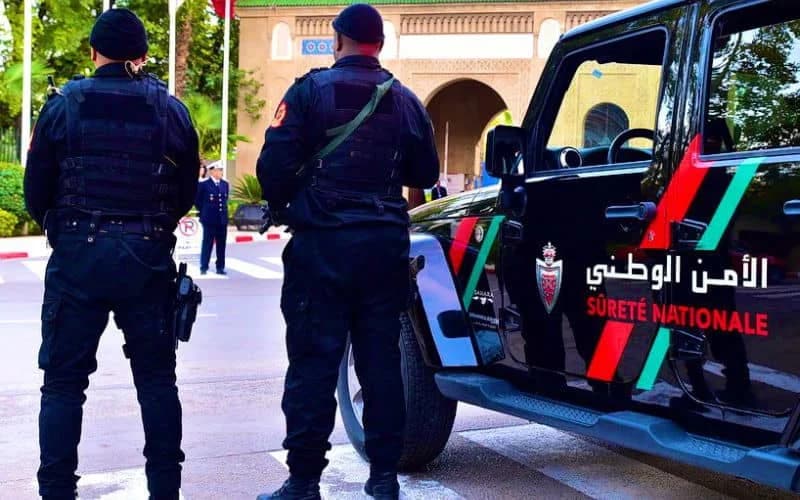
- Tourist areas are well-monitored
- Terrorism risk in 2026 is low
Political stability
- ✅ Stable monarchy (King Mohammed VI)
- ✅ No major political unrest in past decade
- ✅ Peaceful country in volatile region
- ✅ Strong relationship with EU and US
When to Be Most Careful
Times of higher risk
- ⚠️ Late nights in medinas (12am+) — fewer people, easier targets
- ⚠️ Crowded festivals/markets — pickpocketing risk
- ⚠️ Ramadan in remote areas — businesses closed, fewer locals around
Times when you can relax
- 🟢 Daytime in cities — safe and pleasant
- 🟢 Tourist-frequented areas — well-monitored
- 🟢 High-end hotels and riads — staffed, secured
Essential Safety Tips
Before you go
- ✅ Buy travel insurance (€20-30 for 2 weeks)
- ✅ Register with your embassy (if from EU/US/UK/Canada)
- ✅ Tell someone your itinerary
- ✅ Make copies of passport and important documents
- ✅ Download offline Google Maps for your destinations
During your trip
- ✅ Use Uber/Careem at night
- ✅ Keep valuables in hotel safe
- ✅ Use crossbody bag with zipper
- ✅ Don't display expensive cameras/phones unnecessarily
- ✅ Trust your instinct—if something feels off, leave
Get connected from day 1
Pro tip: An Airalo Morocco eSIM gives you instant internet on arrival. €5 for 1GB lets you use Google Maps, WhatsApp, and Uber from the moment you land. Much safer than wandering looking for a SIM card.
Family Safety in Morocco
Is Morocco family-friendly?
Yes, absolutely. Moroccans love children, restaurants welcome families, and the cultural experience is enriching.
Best family-friendly destinations
- Marrakech (with kid-friendly day trips like Agafay Desert)
- Essaouira (relaxed, beach, art)
- Casablanca (modern amenities, family parks)
- Atlas Mountains (family-friendly Berber villages)
- Agadir (resort-style, kid-friendly hotels)
Things to do with kids
- ✅ Camel rides in Agafay Desert
- ✅ Cooking class in Marrakech
- ✅ Beach + sailing in Essaouira
- ✅ Family hammam experiences
FAQ
Is Morocco safer than Egypt or Turkey for tourists?
Generally yes. Morocco is consistently rated safer than Egypt due to political stability and lower terrorism risk. Turkey is also safe but Morocco has the advantage of being a smaller, more concentrated tourist circuit. Egypt has more historical sites but more travel friction.
Is Marrakech safe at night?
Yes, with normal precautions. The medina has fewer people late at night. Use Uber after 10pm. Stick to well-lit streets. The main square Jemaa el-Fnaa is bustling and safe until late.
Should I worry about food poisoning in Morocco?
Slightly more than in Western Europe. Eat at well-reviewed restaurants. Avoid raw vegetables in cheap eateries. Drink bottled water. Most travelers experience mild stomach upset for a day or two—usually due to spices, not unsafe food.
Is Casablanca safe at night?
Mostly yes. Stick to safer neighborhoods (Maarif, Bourgogne, Hivernage). Avoid certain areas near the central train station after dark. Use Uber/Careem for taxis.
Can I drink alcohol in Morocco?
Yes. Morocco is more liberal than Saudi Arabia or UAE. Alcohol is sold in licensed restaurants, hotels, and select shops. Public drinking is technically illegal but common in tourist areas.
Is the medina safe for solo female travelers?
Generally yes during day. Use crowded streets, not back alleys. Walk with confidence. Cover shoulders and knees. Most solo female travelers report Marrakech medina feels safer than they expected.
Should I get travel insurance for Morocco?
Yes, absolutely. Travel insurance is cheap (€20-30 for 2 weeks) and covers:
- Medical emergencies (€1000+ saved)
- Stolen luggage
- Trip cancellation
- Emergency evacuation
- Legal assistance
Companies like SafetyWing and Heymondo offer specific travel insurance for Morocco.
What if I lose my passport in Morocco?
Contact your embassy immediately:
- US Embassy in Rabat: +212 537 637 200
- UK Embassy in Rabat: +212 537 633 333
- French Embassy: Multiple offices
Get an emergency travel document or replacement.
Final Thoughts
Morocco is one of the safest countries in Africa and the Arab world. The "danger" most travelers worry about is harassment and scams, not violent crime. Both are manageable with awareness and confidence.
If you've traveled to Greece, Spain, Italy, Mexico, or Brazil, you'll be totally fine in Morocco. If you're more cautious by nature, Morocco is still a great destination—just stick to well-reviewed accommodations, use Uber at night, and dress modestly in cultural areas.
The reward is a country that's genuinely unique: dramatic landscapes, warm hospitality, incredible food, and prices that let you experience luxury for a fraction of European costs.
Planning your Morocco trip and want trusted local guidance? Our team helps travelers plan safe, customized itineraries with verified accommodations and trusted local guides. Get a free consultation →